Creating a clear positioning and service offering for Avalon’s Sales Advisory
Timeline: 8 Weeks
Project Type: Service Design
Role: Service Designer
CONTEXT
Avalon Advisory is a sales consultancy serving mid-sized B2B SaaS and tech companies at a critical growth inflection point. Their clients — typically 50 to 200 employees — have validated their product and established a customer base but now face the strains of scaling.
THE PROBLEM
As these companies scale, sales processes that once worked begin to show cracks: internal bandwidth becomes stretched, leadership is torn between strategic direction and day-to-day execution, and sales inefficiencies start to surface — slowing momentum and creating frustration across teams.
Avalon came to me while figuring out how to structure, position, and communicate their service offering, with the goal of increasing conversion of prospects into clients.
MY APPROACH
I started by mapping the landscape Avalon’s clients operate in — identifying the specific pain points their target segment faced and what these companies were really hiring a consultant to accomplish, functionally, emotionally, and socially.
From there, I translated those insights into strategic decisions: how Avalon’s services should be structured to address varied client needs, and how their brand and communication needed to build the trust required for conversion.
IMPACT AT A GLANCE
Clear positioning that helped Avalon actually communicate what they were offering
A flexible service model that meets clients where the need is most urgent
A more legitimate presence through cohesive visual identity, logo, website, and assets that convey credibility and reduce perceived risk
Research Insights
To understand how Avalon could position itself effectively, I needed to map the landscape their clients operate in. I focused on two key questions: What specific problems do these companies face? And what functional, emotional, and social jobs are they hiring a consultant to do?
Mapping Client Challenges
Through secondary research and competitive analysis, I identified five recurring pain points across Avalon’s target segment:
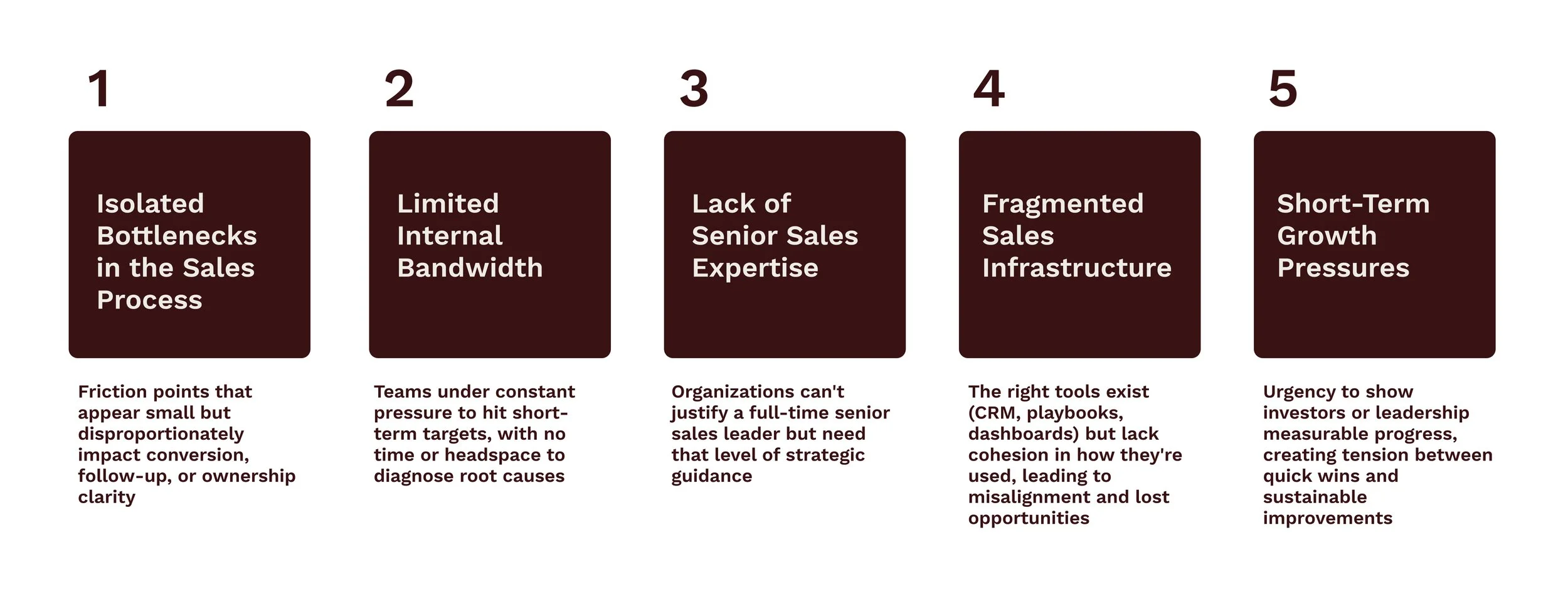
The 5 main issues Avalon's clients face
Key Insight: Clients Need Confidence and Control
Mapping these challenges through a jobs-to-be-done lens revealed something deeper than surface-level needs: clients weren’t just looking for tactical fixes. They needed confidence that hidden inefficiencies weren’t undermining results, relief from constant pressure, assurance that strategic decisions were backed by authority, and control over what was happening across their sales pipeline. In other words, their core need was confidence, credibility, and control in high-pressure environments.
Solution: Designing a Modular Service System
The insights pointed toward a clear strategic direction: Avalon needed a flexible service model that could address specific client problems at specific moments, rather than forcing companies into predefined packages.
Service Architecture
By designing a three-part modular system, each area addresses distinct client needs while working together as a cohesive ecosystem. This structure allows clients to enter the service by resolving their most urgent need — whether that’s a tactical skill gap, a systemic misalignment, or a leadership capability issue — and expand engagement as needs evolve.
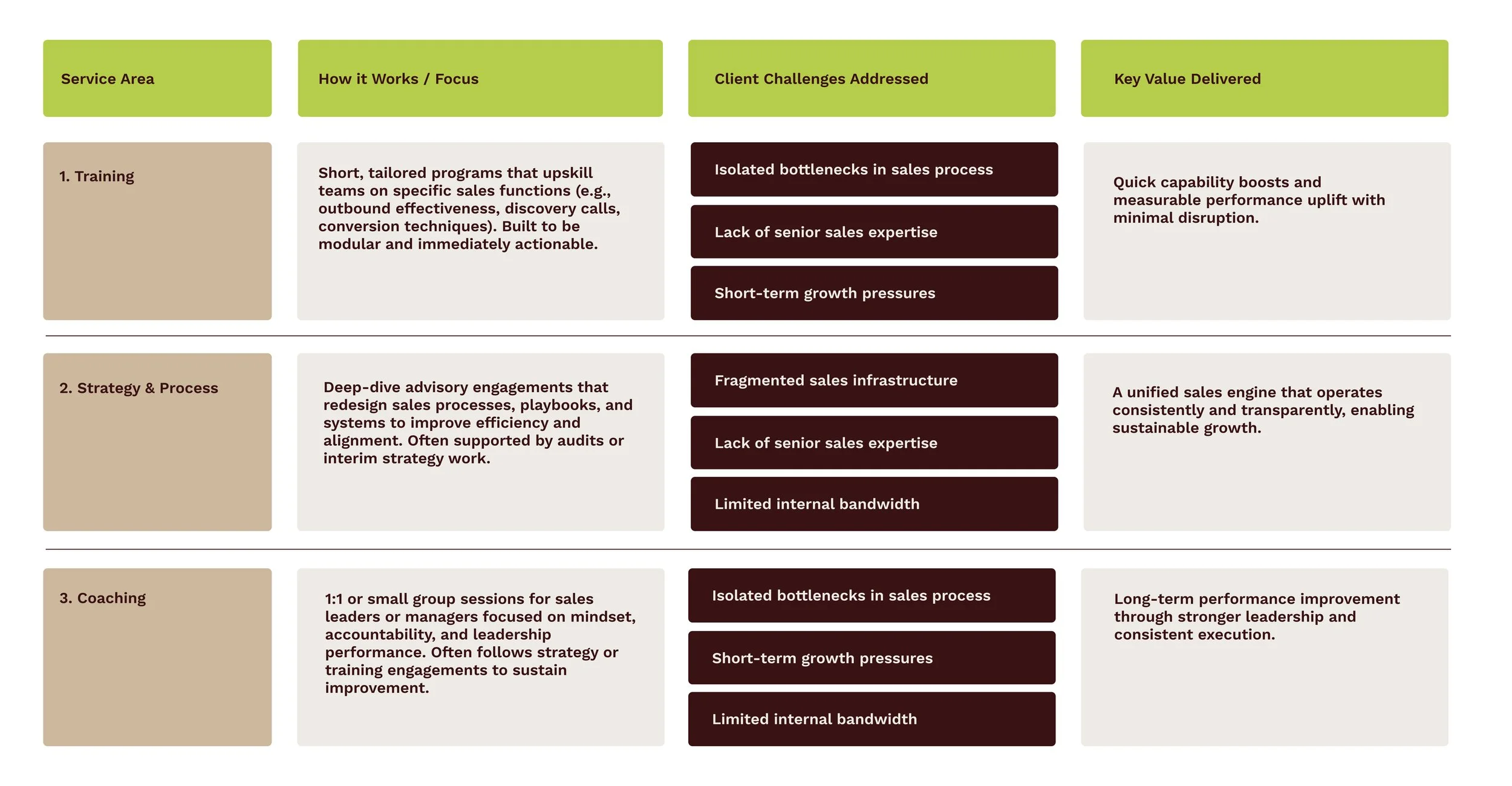
Avalon's service structure and the client challenges it addresses
Solution: Building Trust Through Brand
Solving the right problems only matters if clients trust Avalon enough to let them in. At this stage, companies are risk-averse about external advisors — they need to perceive professionalism, stability, and credibility before they’ll share sensitive sales data or internal challenges.
I developed a brand strategy focused on three trust-building pillars - together, these elements create an initial impression of competence and reliability — reducing friction in the decision to engage:
1. Cohesive Visual Identity
A polished, confident visual system signals legitimacy at first glance. Clean typography, a color palette that conveys both seriousness through neutral tones and approachability with a bold green, and structured layouts communicate that Avalon is organized, dependable, and detail-oriented — qualities clients need in a consultant handling high-stakes work.
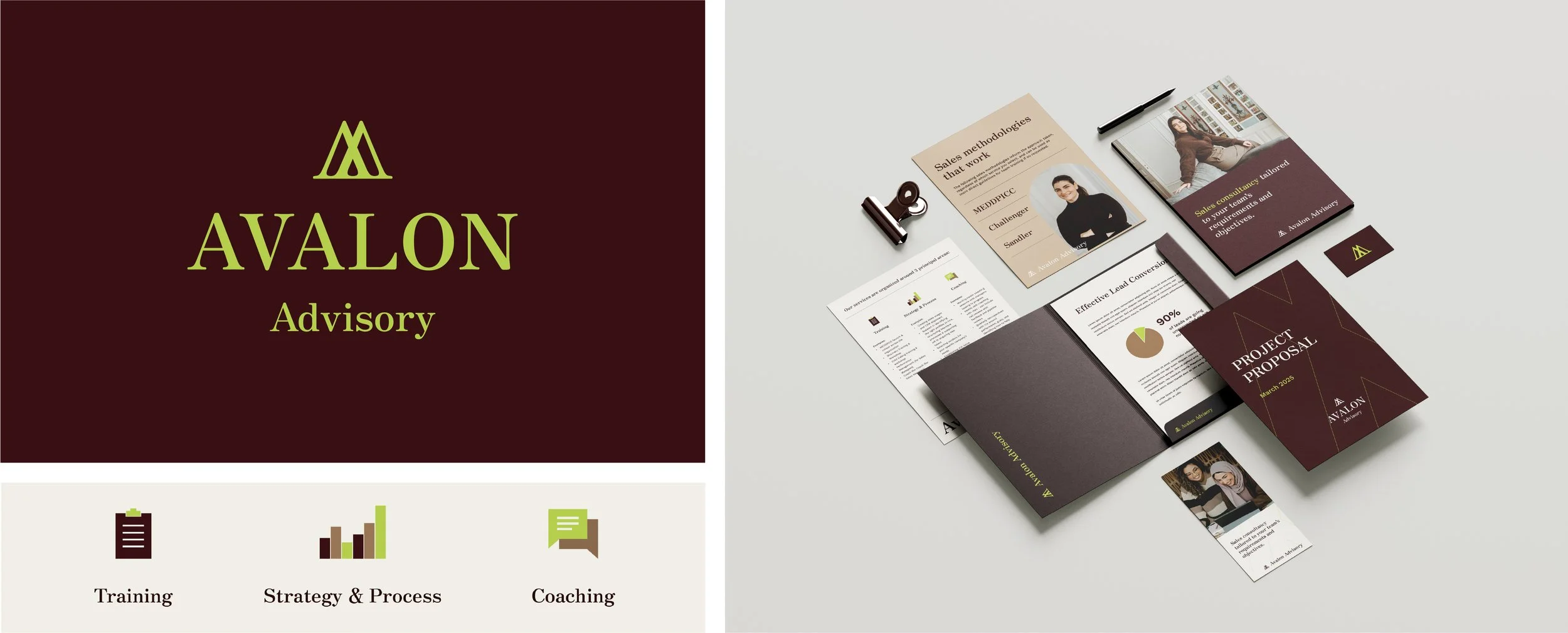
Avalon Advisory brand assets: Logo, icons and proposal templates
2. Clear, Structured Communication
Every client-facing material — their website, service descriptions, proposals — was designed for clarity and scannability. This isn't just aesthetic; it's a demonstration of how Avalon operates: efficiently, transparently, and without unnecessary complexity.
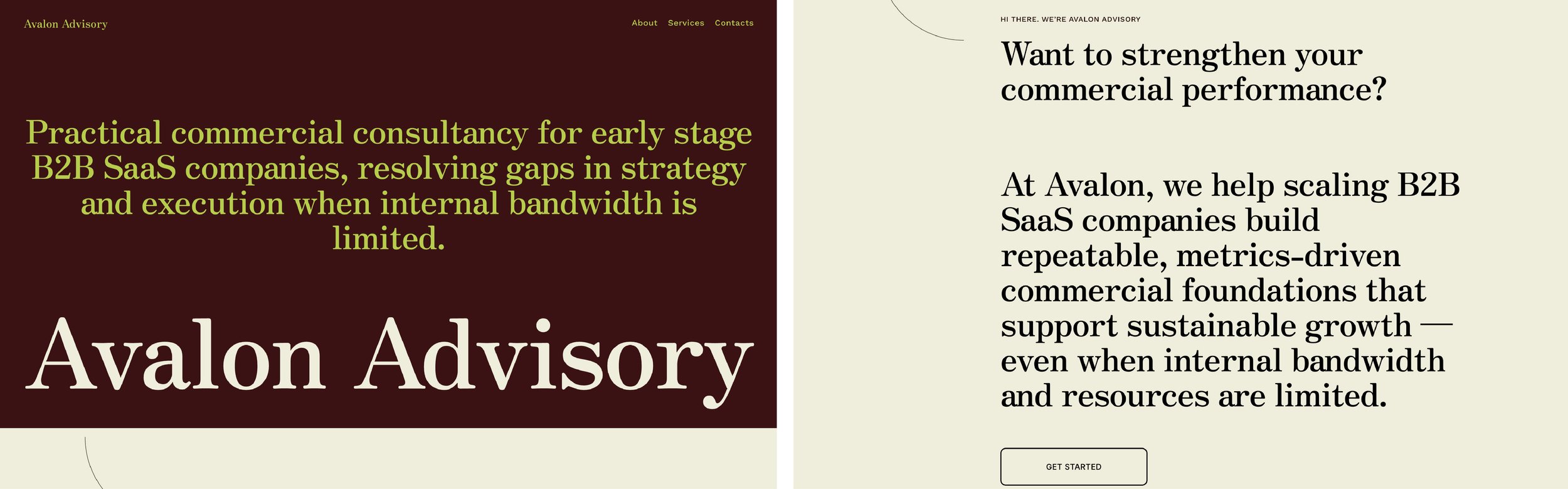
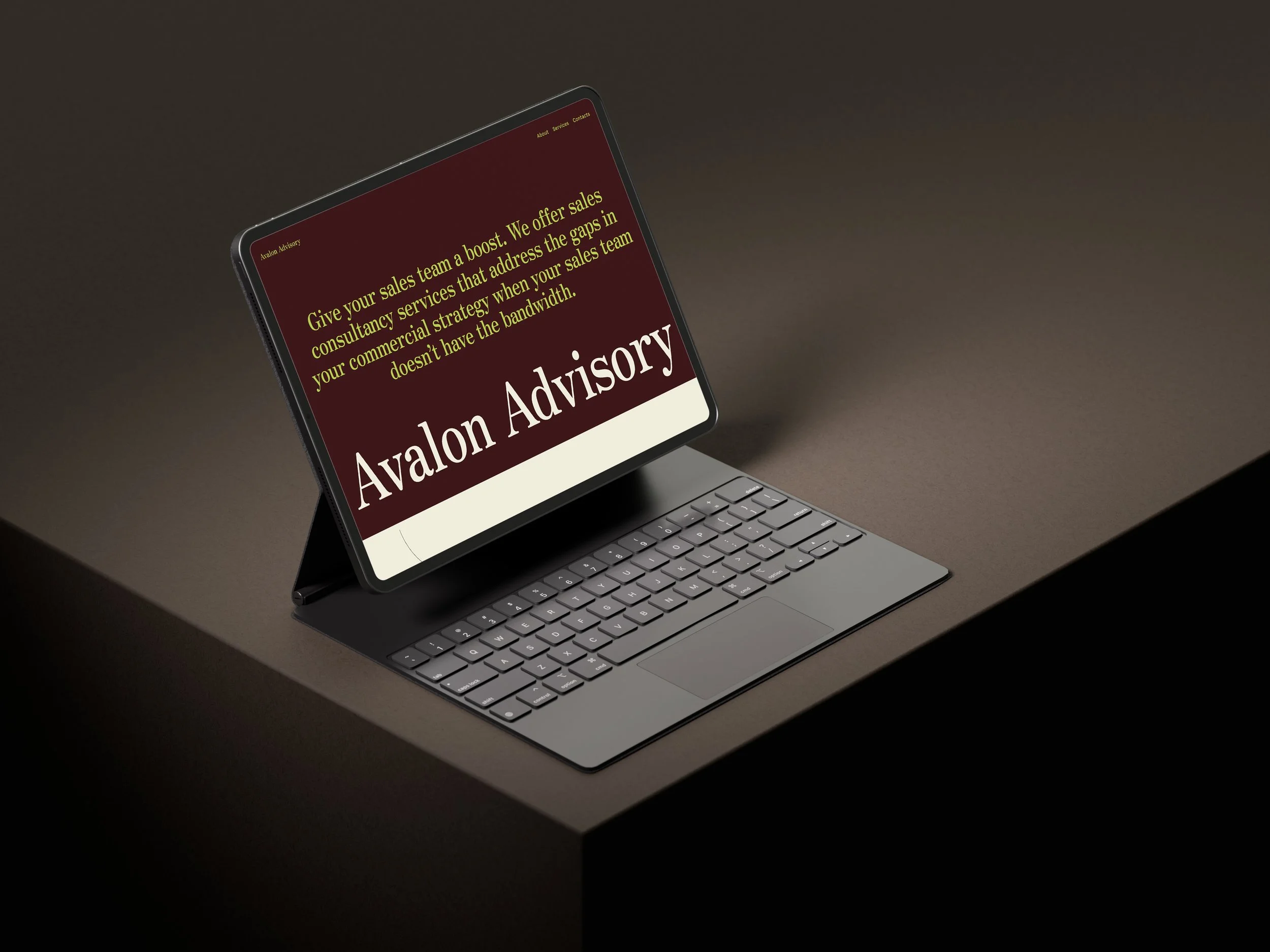
Avalon's website clearly describes what their service can do for their clients
3. Social Proof
A critical part of building trust is demonstrating past success. I identified the need for social proof — testimonials and case studies that showcase tangible impact — as essential to support the brand strategy. These materials allow prospects to see themselves in previous clients' challenges and outcomes, turning abstract credibility into concrete evidence.
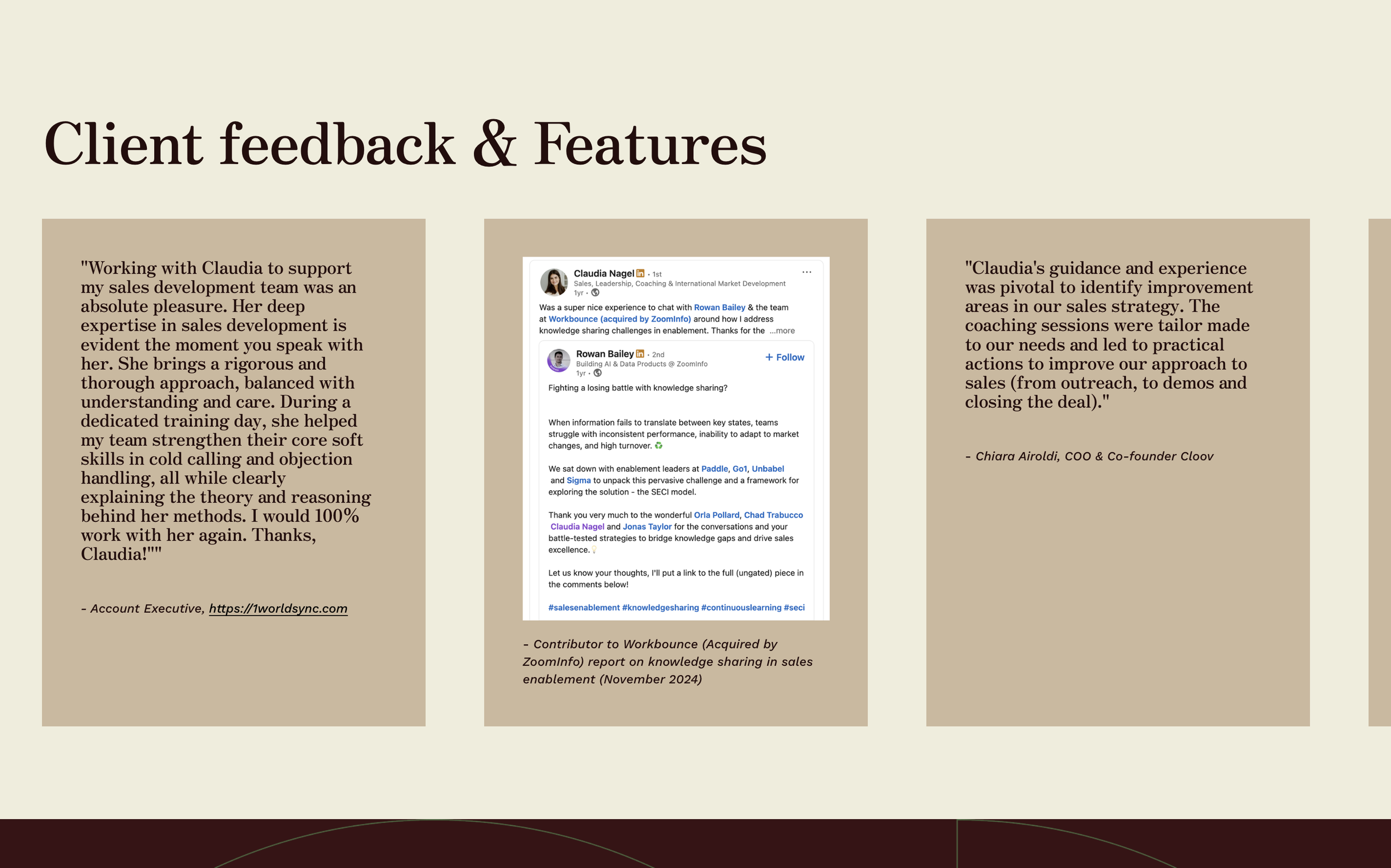
The Client feedback & Features section of the website was essential social proof to building trust with Avalon's clients
Impact
This project gave Avalon a clear go-to-market foundation:
A positioning strategy rooted in specific client pain points and jobs-to-be-done, making it easier to communicate value in discovery conversations
A flexible service model that doesn’t force clients into predefined packages but instead meets them where the need is most urgent
A professional brand presence that conveys credibility and reduces perceived risk in the buying decision
The modular structure has proven particularly valuable: clients often start with one targeted engagement (a training sprint or process audit) and expand into broader work as trust builds — exactly the conversion path this system was designed to enable.
Learnings
This project highlighted both the value and limitations of secondary research. Without access to Avalon’s actual clients, I couldn’t validate the service structure or messaging through first-hand user research — and I couldn’t test how well the website copy and service flow communicated value in practice. That testing would be the next step.
What did emerge clearly was the usefulness of the jobs-to-be-done framework. Mapping not just functional needs (solve a specific problem) but also emotional needs (feel confident, regain focus) and social needs (demonstrate competence to stakeholders) gave me a much richer picture of what Avalon’s clients were actually seeking. For a tech business, thinking beyond features and capabilities to consider these deeper motivations shifted how I approached the positioning — and is a lens I’ll carry forward into future projects.
Next Steps
This project built the foundational positioning and brand strategy Avalon needed at launch. The natural evolution would be to examine what’s actually happening in practice: how clients are moving through Avalon’s service offerings, where they encounter friction or clarity, and where Avalon’s internal processes might need refinement. Testing the service structure and messaging directly with clients would validate whether these strategic foundations are translating into clear communication and effective conversions.
Browse more projects:
-
![]()
From Chaos to Clarity: Redesigning Portugal's Residence Renewal Experience
Service design for AIMA Portugal
-
![]()
A branding brief that revealed a service design opportunity
Service design for Rita Santos Coaching
-
![]()
Avalon Advisory
Brand identity for a commercial consultancy working with early stage B2B SaaS companies
-
![]()
The Joy Spot
Brand identity for a space dedicated to female pleasure in Lisbon
-
![]()
Rita Santos Coaching
Brand identity and website design for a personal coach working with people navigating life and career transitions